
 Tweedehands
Boek
Tweedehands
Getest & gereinigd · met garantie
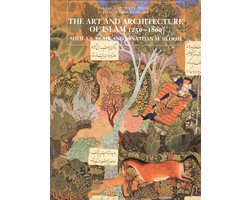
Art And Architecture Of Islam 12501800
€29,95
Conditie
- 3 maanden garantie
- Voor 16:00 besteld, vandaag verzonden
- Gratis verzending vanaf €50
- Getest & schoongemaakt
Productomschrijving
Many masterpieces of Islamic art, such as the Alhambra and the Taj Mahal, were produced during the period between the early 13th century and the advent of European colonial rule in the 19th. This work surveys the architecture and arts of the traditional Islamic lands during this era.
Virtually all the masterpieces of Islamic art—the Alhambra, the Taj Mahal, and the Tahmasp Shahnama—were produced during the period from the Mongol conquests in the early thirteenth century to the advent of European colonial rule in the nineteenth. This beautiful book surveys the architecture and arts of the traditional Islamic lands during this era.
Conceived as a sequel to The Art and Architecture of Islam: 650-1250, by Richard Ettinghausen and Oleg Grabar, the book follows the general format of the first volume, with chronological and regional divisions and architecture treated separately from the other arts. The authors describe over two hundred works of Islamic art of this period and also investigate broader social and economic contexts, considering such topics as function, patronage, and meaning. They discuss, for example, how the universal caliphs of the first six centuries gave way to regional rulers and how, in this new world order, Iranian forms, techniques, and motifs played a dominant role in the artistic life of most of the Muslim world; the one exception was the Maghrib, an area protected from the full brunt of the Mongol invasions, where traditional models continued to inspire artists and patrons. By the sixteenth century, say the authors, the eastern Mediterranean under the Ottomans and the area of northern India under the Mughals had become more powerful, and the Iranian models of early Ottoman and Mughal art gradually gave way to distinct regional and imperial styles. The authors conclude with a provocative essay on the varied legacies of Islamic art in Europe and the Islamic lands in the nineteenth and twentieth centuries.
Virtually all the masterpieces of Islamic art—the Alhambra, the Taj Mahal, and the Tahmasp Shahnama—were produced during the period from the Mongol conquests in the early thirteenth century to the advent of European colonial rule in the nineteenth. This beautiful book surveys the architecture and arts of the traditional Islamic lands during this era.
Conceived as a sequel to The Art and Architecture of Islam: 650-1250, by Richard Ettinghausen and Oleg Grabar, the book follows the general format of the first volume, with chronological and regional divisions and architecture treated separately from the other arts. The authors describe over two hundred works of Islamic art of this period and also investigate broader social and economic contexts, considering such topics as function, patronage, and meaning. They discuss, for example, how the universal caliphs of the first six centuries gave way to regional rulers and how, in this new world order, Iranian forms, techniques, and motifs played a dominant role in the artistic life of most of the Muslim world; the one exception was the Maghrib, an area protected from the full brunt of the Mongol invasions, where traditional models continued to inspire artists and patrons. By the sixteenth century, say the authors, the eastern Mediterranean under the Ottomans and the area of northern India under the Mughals had become more powerful, and the Iranian models of early Ottoman and Mughal art gradually gave way to distinct regional and imperial styles. The authors conclude with a provocative essay on the varied legacies of Islamic art in Europe and the Islamic lands in the nineteenth and twentieth centuries.
Specificaties
EAN9780300064650
Aantal pagina's364
AuteurSheila S. Blair
BindwijzePaperback
Genre nlMens & Maatschappij
Jaar van uitgifte1996
TaalEngels
UitgeverijYale University Press
Game genreMens & Maatschappij
Fabrikant en levering
Wij zijn je aanspreekpunt voor vragen en retour
Verkocht en geleverd doorReway (KVK 68691378)Lijndenweg 30L, 1951 NC Velsen-Noord, Nederlandklantenservice@reway.nl
Zo werkt kopen bij Reway
Krijg ik garantie en kan ik retourneren?
Ja. Je krijgt standaard 3 maanden garantie, ook op tweedehands producten. Daarnaast heb je 14 dagen bedenktijd.
Wanneer wordt mijn bestelling verzonden?
Op werkdagen geldt: voor 16:00 besteld, vandaag verzonden.
Anderen bekeken ook