
 Tweedehands
Boek
Tweedehands
Getest & gereinigd · met garantie
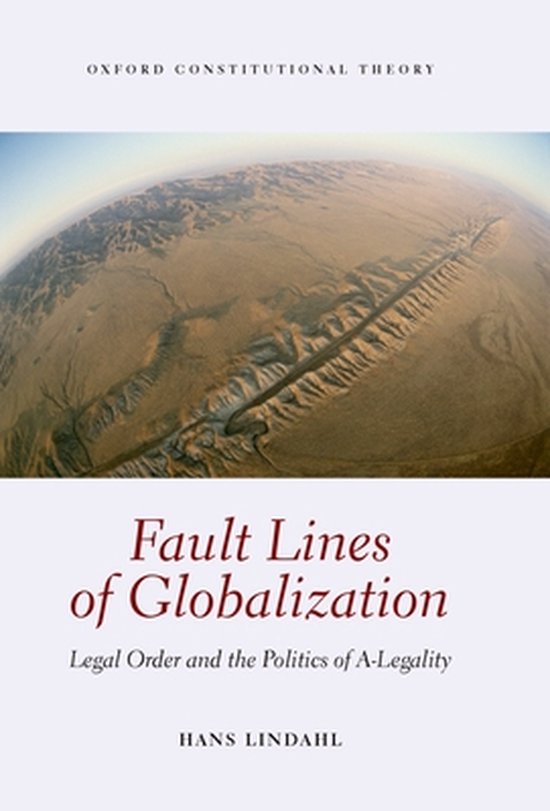
Fault Lines Of Globalization Ocon C
€87,95
Conditie
- 3 maanden garantie
- Voor 16:00 besteld, vandaag verzonden
- Gratis verzending vanaf €50
- Getest & schoongemaakt
Productomschrijving
A distinctive contribution to the current debate about the nature of globalization processes, this book examines the boundaries of legal and constitutional orders and the relationship of these boundary issues to the question of the political foundations and legitimacy of legal orders.
The question whether and how boundaries might individuate and thereby be constitutive features of any imaginable legal order has yet to be addressed in a systematic and comprehensive manner by legal and political theory. This book seeks to address this important omission, providing an original contribution to the debate about law in a global setting. Against the widely endorsed assumption that we are now moving towards law without boundaries, it argues that every imaginable legal order, global or otherwise, is bounded in space, time, membership, and content. The book is built up around three main insights. Firstly, that legal orders can best be understood as a form of joint action in which authorities mediate and uphold who ought to do what, where, and when with a view to realising the normative point of acting together. Secondly, that behaviour can call into question the boundaries that determine who ought to do what, where and when: a-legality. Thirdly, that this a-legality reveals boundaries as marking a limit and, to a lesser or greater extent, a fault line of the respective legal order. Legal boundaries reveal ways of ordering the who, what, where, and when of behaviour which have been excluded, yet which remain within the range of practical possibilities accessible to the collective: limits. However legal boundaries also intimate an order which exceeds the range of possibilities accessible to that collective - the fault line of the respective legal order. Careful analysis of a wide range of legal orders, including nomadism, Roman law, classical international law, ius gentium, multinationals, cyberlaw, lex mercatoria, the EU, global regimes of human rights, and space law validates this thesis. What sense, then, can we make of the normativity of the law, if there can be no inclusion without exclusion? Arguing that legal and political theories misunderstand how legal boundaries do their work of including and excluding, the book develops a normative theory of legal order which is alternative to both communitarianism and cosmopolitanism.
The question whether and how boundaries might individuate and thereby be constitutive features of any imaginable legal order has yet to be addressed in a systematic and comprehensive manner by legal and political theory. This book seeks to address this important omission, providing an original contribution to the debate about law in a global setting. Against the widely endorsed assumption that we are now moving towards law without boundaries, it argues that every imaginable legal order, global or otherwise, is bounded in space, time, membership, and content. The book is built up around three main insights. Firstly, that legal orders can best be understood as a form of joint action in which authorities mediate and uphold who ought to do what, where, and when with a view to realising the normative point of acting together. Secondly, that behaviour can call into question the boundaries that determine who ought to do what, where and when: a-legality. Thirdly, that this a-legality reveals boundaries as marking a limit and, to a lesser or greater extent, a fault line of the respective legal order. Legal boundaries reveal ways of ordering the who, what, where, and when of behaviour which have been excluded, yet which remain within the range of practical possibilities accessible to the collective: limits. However legal boundaries also intimate an order which exceeds the range of possibilities accessible to that collective - the fault line of the respective legal order. Careful analysis of a wide range of legal orders, including nomadism, Roman law, classical international law, ius gentium, multinationals, cyberlaw, lex mercatoria, the EU, global regimes of human rights, and space law validates this thesis. What sense, then, can we make of the normativity of the law, if there can be no inclusion without exclusion? Arguing that legal and political theories misunderstand how legal boundaries do their work of including and excluding, the book develops a normative theory of legal order which is alternative to both communitarianism and cosmopolitanism.
Specificaties
EAN9780199601684
Aantal pagina's286
AuteurHans Lindahl
BindwijzeHardcover
Genre nlMens & Maatschappij
Jaar van uitgifte2013
TaalEngels
UitgeverijOxford University Press
Game genreMens & Maatschappij
Fabrikant en levering
Wij zijn je aanspreekpunt voor vragen en retour
Verkocht en geleverd doorReway (KVK 68691378)Lijndenweg 30L, 1951 NC Velsen-Noord, Nederlandklantenservice@reway.nl
Zo werkt kopen bij Reway
Krijg ik garantie en kan ik retourneren?
Ja. Je krijgt standaard 3 maanden garantie, ook op tweedehands producten. Daarnaast heb je 14 dagen bedenktijd.
Wanneer wordt mijn bestelling verzonden?
Op werkdagen geldt: voor 16:00 besteld, vandaag verzonden.
Anderen bekeken ook